Dahi Is the Artist on This One
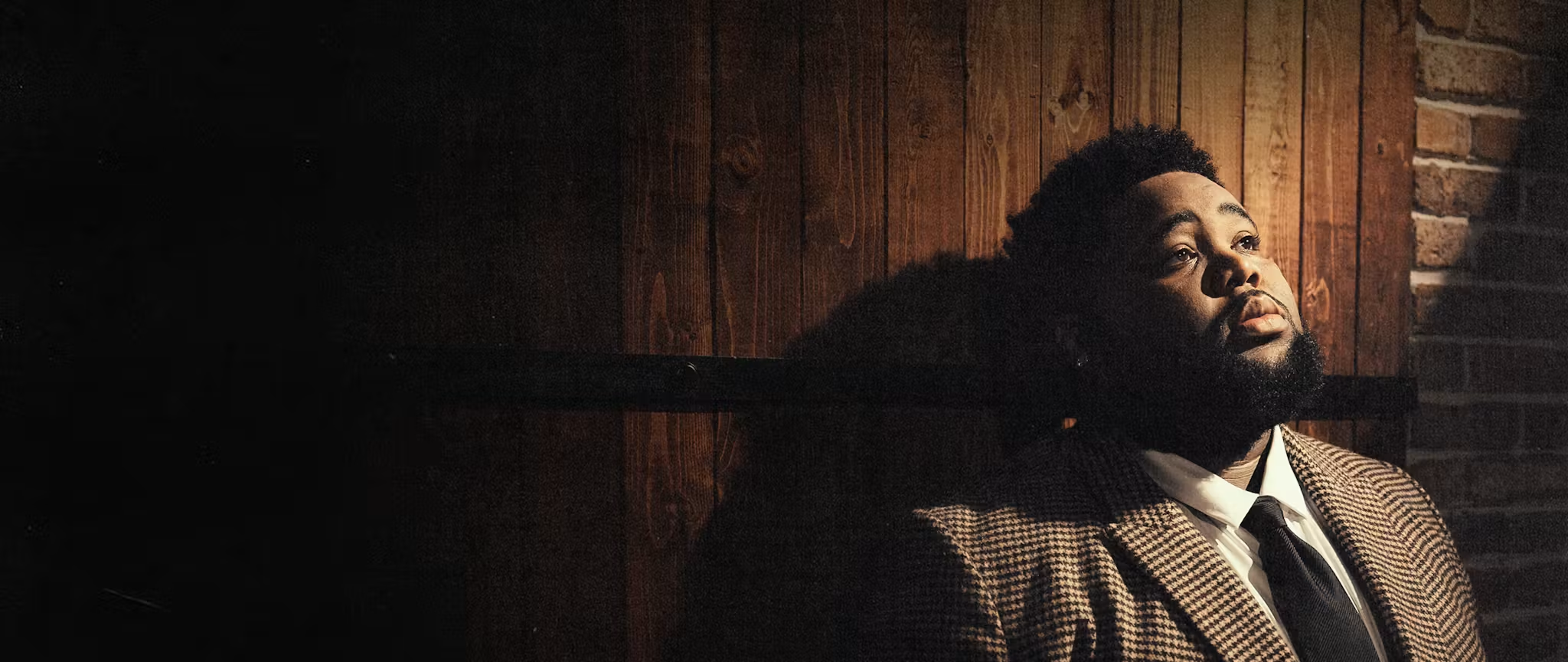
Dahi has spent years helping shape records for other people. On August 28, the Grammy-winning producer released Black Boy (Alternative), his debut album as the primary artist.
The 11-track project includes Kendrick Lamar, Childish Gambino, Vince Staples, Moses Sumney, Ravyn Lenae, Baby Rose, Fousheé, Channel Tres, Amber Mark and other collaborators.
Dahi’s official Bandcamp page lists the full album, physical editions and the release date. The project is also being presented as more than a producer compilation: the credits and rollout position Dahi’s own musical identity at the center.
The Guest List Comes From a Career Built Behind the Boards
Dahi’s name has long been attached to important records without always being the name listeners click first.
His production history includes work connected to Kendrick Lamar, Drake, SZA and other major artists. That background gives the debut’s guest list context. Kendrick appears with Amber Mark on “How To Pray.” Childish Gambino appears on “Running.” Vince Staples joins Channel Tres and French Anthony on “Who Are You.”
The album is not asking listeners to discover an unknown producer. It is asking them to reconsider someone they may already know through other people’s catalogs.
The Music Pushes Beyond a Standard Rap-Producer Album
The Guardian’s release-day review describes Black Boy (Alternative) as a guitar-heavy, genre-blurring project that pulls from alternative rock, Afrobeat, R&B and rap.
That framing matches the album’s own presentation. The Bandcamp page tags the project across alternative hip-hop, alternative R&B and alternative rap rather than reducing it to a beat-tape format.
The physical release reinforces that intent. Dahi is selling standard and special-edition vinyl packages, including a 2xLP version with an instrumental disc, as well as a CD.
Dahi Controls the Whole Frame This Time
The album puts Dahi in control of sequencing, collaborators, instrumentation and the emotional center of the record instead of asking him to shape somebody else’s world.
That can make earlier production work sound different in retrospect. Choices that once seemed like pieces of another artist’s identity can start looking like part of the producer’s own vocabulary.
The RRL Read
Hip-hop has a long history of producers moving from behind the boards into more visible artist roles, but the transition is not automatic.
A famous credit list can get people curious. It cannot make the album coherent.
Black Boy (Alternative) is notable because Dahi is using the relationships built across his production career to support a project with a clear identity of its own.
The guest names will get attention. The longer-term test is whether the album makes listeners think of Dahi as someone whose catalog they follow directly—not only someone they recognize in the credits of everybody else.