Nipsey Hussle Didn’t Stop at Owning the Music. He Started Buying the Ground Under It.
Booth to Boardroom · The Run

Nipsey Hussle Didn’t Stop at Owning the Music. He Started Buying the Ground Under It.

Nipsey Hussle’s ownership story went beyond the music. All Money In, Proud2Pay, The Marathon Clothing and real estate show how he kept moving the ownership line outward.

Rap Recap Live Oct 28, 20256 chapters5 min
The arc: Epic exit / catalog intact Atlantic joint venture Vector90 / Our Opportunity
Scroll to start the run ↓
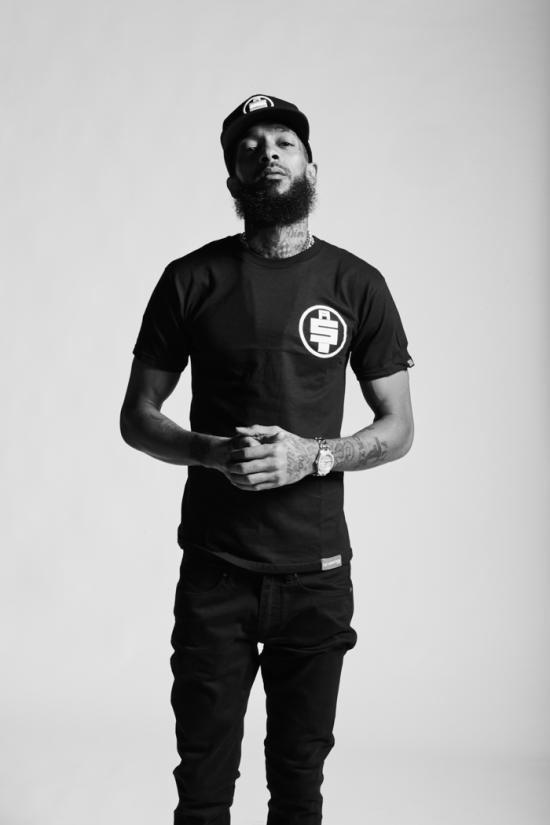
Image: Jimmy Fontaine / Atlantic Records · Source ↗
01 / 06Independence became useful after the first label experience
Start here
THE
RUN

Nipsey Hussle talked about ownership so often that the message can shrink into a slogan.

Own your masters.

Buy back the block.

Stay independent.

The career becomes more useful when you follow what he actually did.

He built All Money In.

He sold Crenshaw for $100 a copy while the music was still available digitally.

He opened The Marathon Clothing on Slauson.

Then he and David Gross bought the strip mall underneath it.

He helped build Vector90 nearby.

The ownership line kept moving farther out.

The Run Line

HOW THE ROLE CHANGED

Five turns show the shape of the run. The chapters fill in everything between them.

01
Epic exit / catalog intact
02
Proud2Pay
03
Atlantic joint venture
04
Bought the property
05
Vector90 / Our Opportunity
01

Independence became useful after the first label experience

The receipt
5%
Epic override if he joined another major before end of 2013

Forbes reported that Nipsey left Epic with his catalog but an override would have given Epic a 5% cut of earnings if he joined another major before the end of 2013.

Source

Nipsey did not begin with a perfect “never sign” philosophy.

He signed with Epic Records early in his career.

The debut album he expected to release there never arrived, and the relationship ended. Forbes later reported that he left with his catalog and returned to operating independently.

All Money In became the structure that let him keep moving.

Mixtapes kept the name active.

Touring built a real audience.

The music stayed connected to Los Angeles instead of waiting for another label campaign to make the career feel official.

By the time Nipsey became an independence example, he had already lived through the less glamorous part: funding work, carrying risk and taking responsibility when nobody else was there to push the button.

Nipsey Hussle seated on a judging panel at the Soundtrack Beat Battle in March 2011.
Nipsey Hussle on a judging panel in March 2011, after the Epic chapter ended and before Proud2Pay made the independent model a national business story.MusicLover650 / Soundtrack Beat Battle / Wikimedia Commons · CC BY-SA 3.0 ↗
02

Proud2Pay exposed the difference between listeners and believers

The receipt
$100
Crenshaw physical price

The files were available digitally while 1,000 limited physical copies were sold at $100 each through Proud2Pay.

Source

In 2013, Nipsey released Crenshaw for free online.

He also offered 1,000 physical copies for $100 each through Proud2Pay.

JAY-Z famously bought 100 copies.

The bigger proof was that the rest of the run sold through too.

People were willing to pay far above the normal price of a CD even though the music itself was already available.

The buyer was not paying for access.

They were buying a limited object tied to the artist, the moment and the feeling of supporting him directly.

Two years later, Mailbox Money pushed the idea further with a small number of $1,000 physical copies while the music remained widely available.

Streaming totals could show how many people listened.

Proud2Pay showed something else: some fans valued participation and proximity much more deeply than casual access.

Nipsey Hussle performing with TeeFlii in December 2013.
Nipsey Hussle performing in December 2013, the same year Crenshaw and Proud2Pay turned direct support into a business proof point.Neon Tommy / Wikimedia Commons · CC BY-SA 2.0 ↗
03

Atlantic entered after All Money In had proof

By the time Victory Lap arrived, Nipsey was negotiating from a different position than he had during the Epic years.

All Money In had a catalog.

The audience had watched the independent run happen in public.

Touring and direct-to-fan experiments had shown demand.

In late 2017, All Money In entered a partnership with Atlantic Records for Victory Lap. Atlantic described the arrangement as a joint venture.

The exact economics of every right were not publicly disclosed, so claims that Nipsey kept “100% of everything forever” go beyond what the public record establishes.

The important change was timing.

A major company entered after Nipsey had already built something worth partnering with.

The pattern
Ownership becomes more meaningful when it moves from a slogan into something tangible the artist, audience and community can still use after the moment passes.
04

The Marathon Clothing turned the artist world into a place

The Marathon Clothing store on Slauson made Nipsey’s ideas physical.

People could visit it.

Buy from it.

Take photos there.

Stand on the same corner the music talked about.

Atlantic described the store as a smart retail experience that connected purchases with exclusive digital content, but the deeper asset was the location.

The brand was not borrowing Crenshaw as scenery.

It was putting commerce and activity back into the same neighborhood that gave the artist identity meaning.

That created a new kind of value.

The music brought attention to the store.

The store gave the audience a place to gather.

Portrait of Nipsey Hussle photographed in April 2014.
Nipsey Hussle in April 2014, as the independent run was expanding from music into a broader Marathon identity.LitoStarr / Wikimedia Commons · CC BY-SA 4.0 ↗
How the business spread

THE BUSINESS
MAP

Each move pushed the career into a different kind of asset. The progression matters more than the number of logos.

01 · MUSIC
All Money In

Kept an independent operating base around releases and catalog ownership after the Epic chapter.

02 · DIRECT
Proud2Pay

Tested how much a smaller group of committed supporters valued scarcity, access and direct participation.

03 · RETAIL
The Marathon Clothing

Turned the Marathon identity into a physical place people could visit, buy from and associate with the neighborhood.

04 · PROPERTY
Slauson strip mall

Moved from operating inside the location to owning the real estate underneath the customer traffic.

05 · WORKSPACE
Vector90

Expanded the thesis into coworking, entrepreneurship and youth access to technology and STEM.

06 · INVESTMENT
Our Opportunity

Pointed toward a broader Opportunity Zone investment model, but remained a developing project rather than a finished national system.

05

Buying the property moved ownership underneath the business

The receipt
$2.5M
Reported Slauson strip-mall purchase price

The Los Angeles Times reported that Nipsey Hussle and David Gross bought the property housing The Marathon Clothing for $2.5 million.

Source

Nipsey and David Gross later acquired the strip mall that housed The Marathon Clothing.

The Los Angeles Times reported a $2.5 million purchase price.

That changed the economics.

At first, the artist was bringing customers to a business on the property.

After the purchase, Nipsey and Gross had ownership in the ground underneath that activity.

If the site became more valuable, if redevelopment happened or if commercial activity grew, the ownership conversation now included the real estate itself.

Forbes reported plans for a mixed-use redevelopment with commercial space and housing.

That is why “buy back the block” hit differently coming from Nipsey.

Capital had actually started moving into the block.

06

Vector90 and Our Opportunity widened the question beyond the artist

Nipsey and Gross also worked on Vector90, a co-working and technology space in South Los Angeles.

The idea connected entrepreneurs, investment and youth access to technology and STEM education.

Before Nipsey was killed in 2019, they were also developing Our Opportunity around the federal Opportunity Zone program. Forbes reported on the idea as an attempt to bring investment into underserved neighborhoods while working with people who already had trust inside those communities.

Our Opportunity was still developing.

It should not be written like a finished national system.

The direction is what matters.

The questions had grown from how to control a music career, to how to keep more value around an audience, to how to own the place where that value was being created, to how that capital might help other people build too.

That is a long distance from selling music out of a trunk.

What survives the story
“The first ownership line was the music. Then the customer relationship. Then the store. Then the ground under the store.”

The Marathon was a sequence, not a collection of side hustles

All Money In made the music business more controllable.

Proud2Pay revealed a deeper tier of fan demand.

The Marathon Clothing made the artist world physical.

Buying the property moved ownership underneath the store.

Vector90 and Our Opportunity pointed toward neighborhood infrastructure beyond the artist.

Those moves make sense together because they kept circling the same place, audience and belief.

Nipsey’s business story is not “every rapper should buy real estate.”

It is the progression.

When real demand appeared, he kept asking whether more of the value around that demand could stay closer to the people and place creating it.

The first ownership line was the music.

Then the customer relationship.

Then the store.

Then the ground under the store.

That is why the story still carries weight.

Bring it down to earth

WHAT
SCALES
DOWN

Do not copy the size of Nipsey’s moves. Follow the logic: prove real demand, learn what supporters value, bring more control closer only when you can operate it, and build things that strengthen the world the music already created.

The Briefing

The Weekly Briefing

One email with the stories worth knowing, the artist moves worth studying and anything around RRL you should not miss.