Miami is easy to flatten into an image.
Bass shaking a trunk. South Beach. Luke yelling over a party record. Trick Daddy saying something only somebody from Dade would say that way. Trina talking dirtier than the men around her. Rick Ross turning luxury into cinema. DJ Khaled assembling a guest list big enough to feel like an event.
All of those versions are real.
None of them are the whole city.
The useful way to understand Miami rap is not as one sound that lasted for 40 years. It is as a city that kept finding new ways to sound local while the rest of hip-hop changed around it.
Miami had a party infrastructure before it had a national rap identity
GRAMMY's history of Southern hip-hop points to a Miami DJ culture that was already developing before local rap became nationally visible. DJs moved equipment into public spaces, talked over records, cut the music down for call-and-response and built parties around bass heavy enough to make the sound system part of the experience.
The Pac Jam became one of the important rooms in that early story. Luther Campbell and the Ghetto Style DJs were bringing hip-hop records and touring acts into Miami while also developing their own local party language.
Red Bull Music Academy's oral history of the Pac Jam makes the point clearly: Miami audiences were not waiting for a record executive to tell them what worked. DJs, dancers, promoters and local crowds were already testing it in real time.
That matters because 2 Live Crew did not arrive in a vacuum.
They landed inside a city that already knew what it wanted from low end, movement and a live crowd.
2 Live Crew turned Miami bass into a national argument
The early 2 Live Crew story is more complicated than the simple version where one group invents an entire regional sound.
Mr. Mixx, Fresh Kid Ice and the group’s earliest lineup had roots outside Miami. But once the group connected with Luke and the city’s bass culture, the combination became inseparable from Miami.
“Throw the D” became an important early Miami-bass record. The group’s albums pushed booming 808s, chants, explicit humor and party energy into a much larger market.
GRAMMY’s Southern hip-hop history credits 2 Live Crew with helping take Miami bass mainstream. Their records also pulled the city into one of rap’s earliest major censorship fights.
In June 1990, a federal district court declared As Nasty as They Wanna Be obscene. A Fort Lauderdale record-store owner was arrested after selling the album, and Luke and Fresh Kid Ice were arrested after performing material from it. The performers were later acquitted of obscenity charges.
Those were separate legal proceedings, and the history should stay that way instead of being compressed into one clean courtroom victory.
What they shared was a national argument over whether sexually explicit rap could be restricted as obscenity and how far police and courts could go in stopping stores, performers and audiences from circulating it.
That chapter can make the music feel like a legal-history footnote.
It should not.
Before the courtrooms, there was a local music economy: clubs, DJs, promoters, independent records and an audience that wanted the bass loud enough to feel physical.
Luke’s role was bigger than being the loudest person on the record
Uncle Luke belongs in the Miami map as artist, promoter and business builder.
His Skyywalker Records—later Luke Records—gave the 2 Live Crew world a company structure. The label helped turn local party energy into releases that could travel nationally.
That does not mean every later Miami rapper came through Luke or sounded like him.
The more useful connection is that Luke helped prove Miami did not need to wait for New York or Los Angeles to create a commercially meaningful rap identity.
He also sits close to the next major branch.
Luke has described an early relationship with Trick Daddy, who appeared around his orbit before becoming the first defining artist of Slip-N-Slide Records. Miami New Times has documented that connection as part of the line between the bass era and the street-rap generation that followed.
The sound changed.
The city did not disappear.
Trick Daddy made another Miami impossible to ignore
By the late 1990s, Miami’s biggest rap story was no longer only built around party bass.
Trick Daddy came out of Liberty City with records that felt heavier, slower and more rooted in neighborhood life. His 1997 debut Based on a True Story arrived through the then-young Slip-N-Slide Records. A year later, www.thug.com widened the audience.
Miami New Times’ 2026 look back at Trick’s debut describes him as one of the voices that helped redefine Southern rap from the city.
The important part is that Trick did not sound like an updated 2 Live Crew member.
His records carried poverty, pride, anger, humor, family pressure and Miami street detail into a new era. The low end was still there, but the center of gravity had moved.
That is one of the first signs that the city was becoming a permanent rap market instead of one genre moment.
Trina made sure the Miami story did not stay male
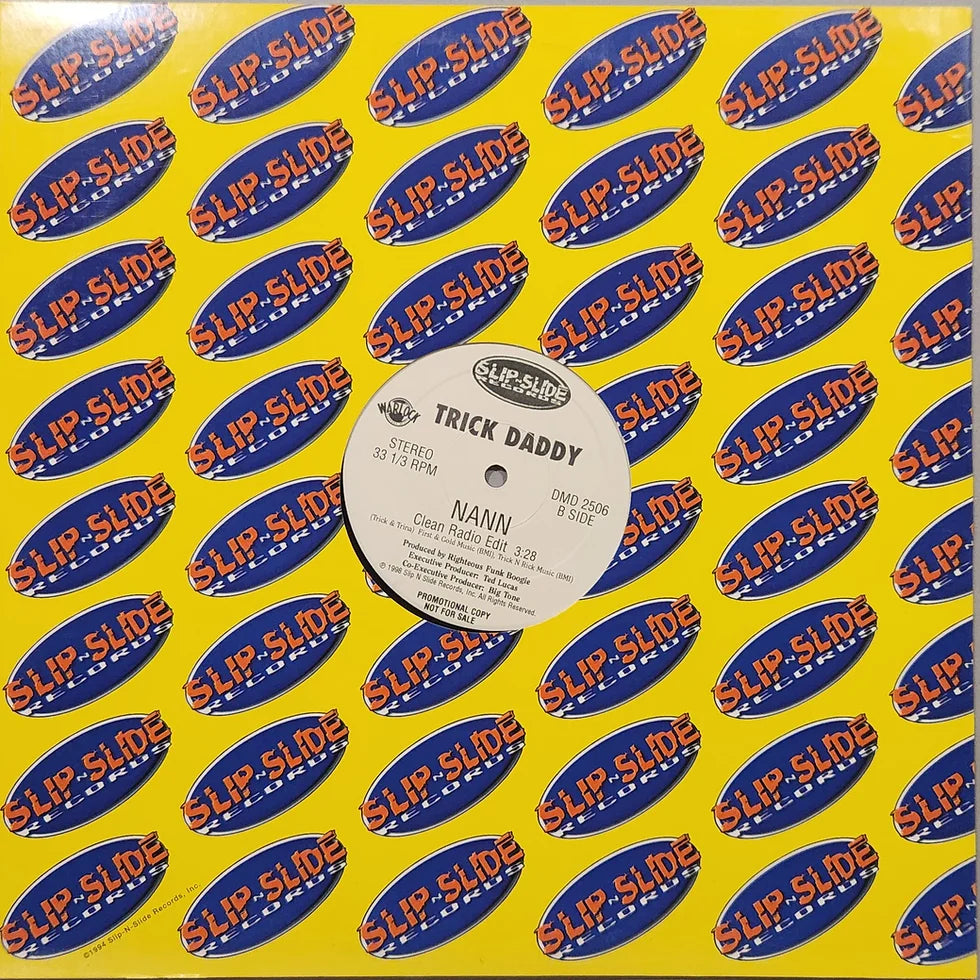
Trina’s entry on Trick Daddy’s “Nann” is one of those features that feels like a debut statement even before the solo album arrives.
She did not enter politely.
She answered Trick with the same sexual confidence and aggression that male rappers had been allowed to turn into persona for years. Her 2000 debut Da Baddest Bitch turned that voice into a full career.
GRAMMY’s Southern hip-hop history places Trina inside the generation that expanded Miami beyond the bass era and gave women in the Dirty South another national reference point.
Miami New Times’ broader history draws a direct generational line from Trina to newer women from South Florida, including City Girls.
That does not mean every Miami woman rapper is a Trina descendant musically.
It means the city already had a nationally visible example of a woman building rap identity out of the same local language and confidence the men were using.
Slip-N-Slide became a bridge between generations
Ted Lucas founded Slip-N-Slide in 1994.
The label’s first major identity came through Trick Daddy and Trina. Later, Rick Ross moved through the same Miami network before his own national breakthrough.
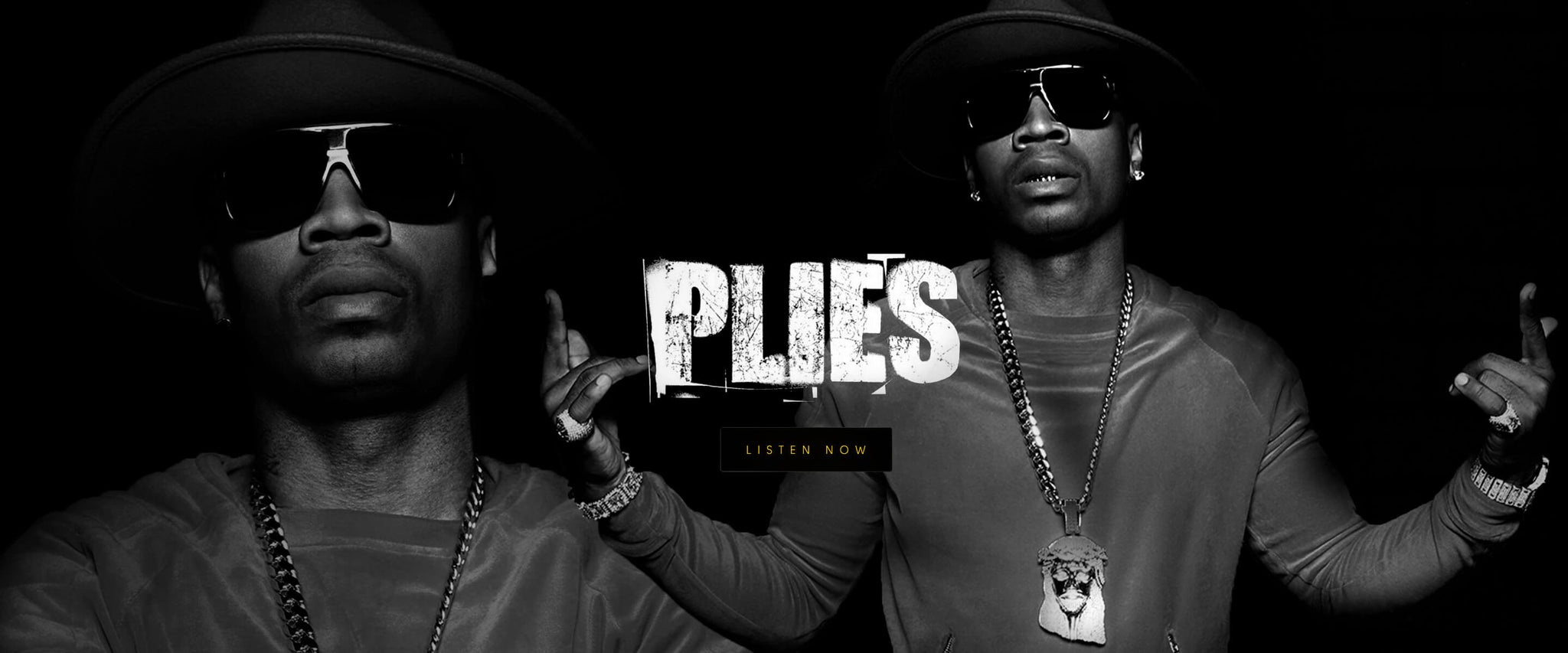
Slip-N-Slide also reached beyond Miami itself. Fort Myers rapper Plies signed with the label in 2004 and broke nationally with The Real Testament in 2007. His run is a useful reminder that a Miami-based company and a Miami rap scene are not the same thing: the label could widen the South Florida map without turning every artist it developed into a Miami artist.
That makes Slip-N-Slide one of the useful connectors in the city’s history.
Luke’s era proved Miami bass and independent regional rap could scale.
Slip-N-Slide helped prove a different kind of South Florida street rap could do the same thing.
The company did not own every important Miami artist, and Miami should not be reduced to one label family tree. But the Trick–Trina–Ross sequence gives the city a visible line from the late 1990s into the 2000s, while Plies shows how the company’s reach extended farther across Florida.
Rick Ross changed the scale and the picture
By the time Rick Ross released “Hustlin’” and Port of Miami in 2006, the visual language around Miami rap shifted again.
Ross made the city sound expensive.
Soul samples, huge drums, drug-kingpin imagery, Maybachs, restaurants, oceanfront wealth and executive ambition became part of a brand that eventually extended into Maybach Music Group.
Miami New Times has documented how Ross spent time around Trick Daddy, Trina and Slip-N-Slide before his breakthrough.
That history matters because the luxury image can make Ross look disconnected from the grittier Miami generation before him.
He was not.
His career grew out of a city where local relationships and earlier artists were already building an audience for Miami rap.
What he did was turn that foundation into another scale and another aesthetic.
DJ Khaled made Miami sound like a meeting place
Khaled represents yet another role.
His signature is not one regional production sound or one lyrical style. His value comes from curation, relationships, radio instincts and the ability to put artists from different regions onto the same record without losing the sense that the event is happening in his world.
That fits Miami differently.
The city has always been a meeting point: Caribbean communities, Southern rap, club music, Latin music, tourists, transplants and artists moving through a market that does not behave exactly like Atlanta, New Orleans or New York.
Khaled’s records turned that social role into a music career.
Again, the sound changed.
The city remained recognizable.
The newer Miami map splits into several branches
A city this old in rap should not end with veterans.
Yung Miami carried City Girls into a newer era where explicit women’s rap, internet personality and Quality Control’s Atlanta infrastructure could all meet inside a South Florida identity.
Denzel Curry represents a different branch entirely: Carol City, Raider Klan, internet-era underground rap, punk-level live energy and a global audience that does not depend on a traditional Miami-bass lineage.
Pouya and other South Florida underground artists built another internet-native path. Florida rap more broadly has produced regional movements far outside Miami as well, from Broward to Jacksonville and Tampa Bay.
Those artists should not be forced into one “Florida sound.”
That would repeat the same mistake people make when they reduce Miami to bass.
Miami’s real through-line is local confidence, not one drum pattern
The most useful connection between Luke, Trick Daddy, Trina, Rick Ross, Khaled and Yung Miami is not that the records sound alike.
They do not.
It is that each generation found something about the city worth keeping visible when the music changed.
Luke kept the party, bass and local business culture loud.
Trick kept Liberty City inside national records.
Trina made Miami women part of the center rather than background characters.
Ross turned Dade ambition into luxury theater.
Khaled turned the city’s relationship-building energy into giant collaborative records.
Yung Miami carried the accent, humor and directness into a social-media-native generation.
That is a stronger history than pretending one style survived unchanged.
The RRL File
Miami rap did not begin with Rick Ross.
It did not begin with Trick Daddy either.
And even 2 Live Crew belong inside an older local culture of DJs, parties, bass and public spaces that taught the city what moved a crowd before rap became a national Miami business.
The 2 Live Crew era made Miami impossible to ignore.
Slip-N-Slide built another bridge through Trick Daddy and Trina.
Rick Ross and DJ Khaled changed the scale.
Newer artists split the city into even more directions.
That is why RRL should map Miami as a permanent culture node, not a playlist genre.
The sound keeps changing.
The 305 keeps finding a way to sound like itself.