What Happened
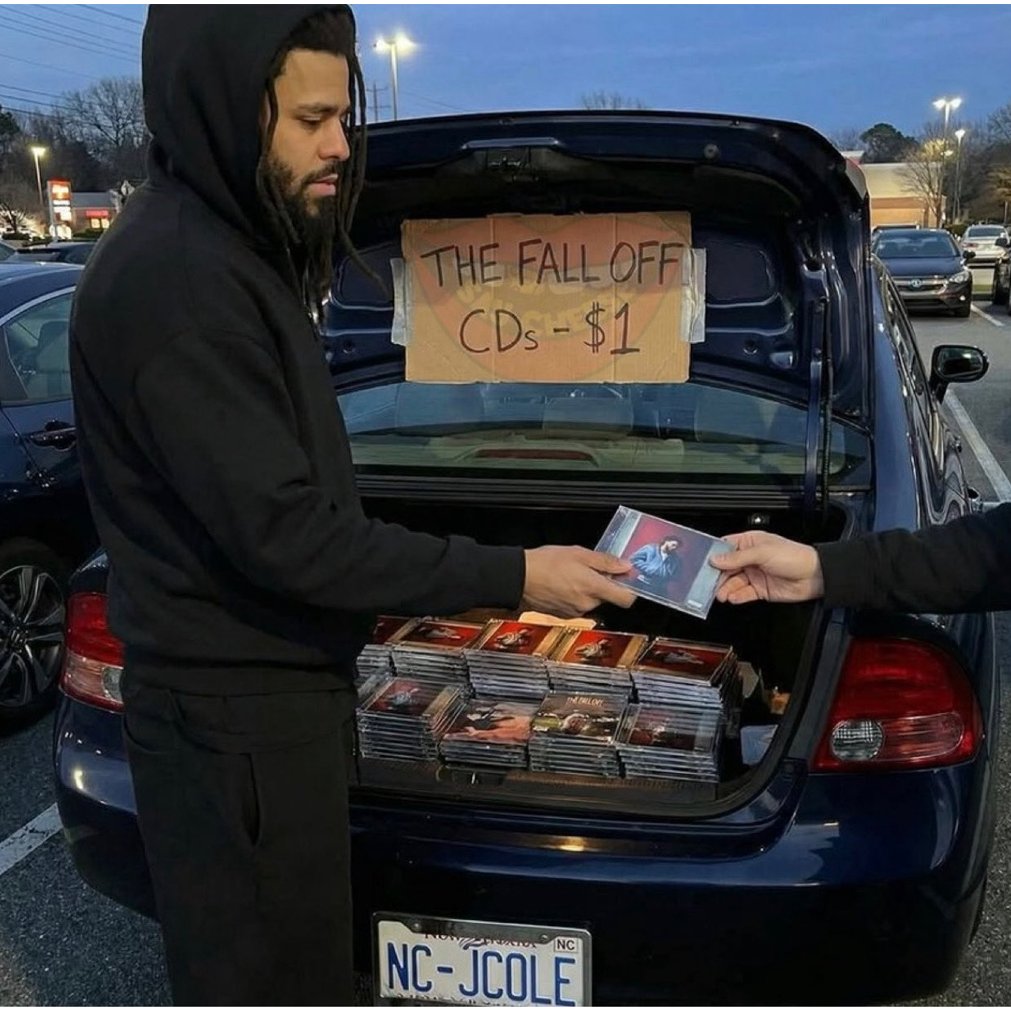
After releasing The Fall-Off in February 2026, J. Cole brought physical copies of the album on the road in an unusually personal way: selling CDs directly from the trunk of his old Honda Civic.
Cole announced what he called “Trunk Sale Tour 26” on February 7, explaining that the idea connected back to his teenage years trying to sell music hand-to-hand in North Carolina.
The trip became a moving fan event, with Cole showing up at campuses and other stops, meeting listeners and selling physical copies himself.
The Washington Post later documented the tour at Howard University, while other reporting followed stops in North Carolina and the crowds that formed around them.
Why the Civic Matters
The car was more than a prop.
Cole explicitly connected it to the period before his own recording career took off, when selling music in person meant walking up to strangers and making a pitch.
Returning to that same ritual after becoming one of rap’s biggest artists gave the rollout a built-in story: the distance between where the career started and where it had arrived.
Fans were not only buying a CD. They were participating in a full-circle moment Cole had intentionally recreated.
Physical Music as an Experience
Streaming makes an album instantly available to millions of people, but it cannot reproduce every kind of fan interaction.
The trunk-sale tour turned physical media into access: a chance to meet Cole, see the car, be present at a stop and leave with an object connected to the memory.
That does not mean physical CDs are suddenly a superior business model to streaming. The scale and economics are different, and Cole’s fame is a major reason the concept could draw crowds.
What made the idea hit was the mismatch: one of rap’s biggest artists using an old Civic and hand-to-hand CDs to make a digital-era album release feel personal.
The RRL Read
Cole used the release of The Fall-Off to revisit a real part of his origin story, then invited fans into that history in person.
The rollout worked because the symbolism was specific to his career. The old Civic and hand-to-hand selling were not generic campaign props; they were pieces of the story he had actually lived.
That is what made a man selling CDs from an old Civic newsworthy in 2026.