After Arista, T.I. Built Grand Hustle — Then Changed the Kind of Deal He Could Ask For.
Booth to Boardroom · The Run

After Arista, T.I. Built Grand Hustle — Then Changed the Kind of Deal He Could Ask For.

After the first label chapter stalled, T.I. and Jason Geter built Grand Hustle, rebuilt demand and returned to the majors looking for a partner. The leverage story kept expanding from there.

Rap Recap Live Sep 22, 20268 chapters10 min
The arc: Arista fallout AKOO / Hustle Gang / Trap Music Museum Ownership line / What scales down
Scroll to start the run ↓
Image: Eddy James Rissling / The Come Up Show / Wikimedia Commons · Source ↗
01 / 08Arista did not end the career. It changed the negotiating position T.I. wanted next.
Start here
THE
RUN

The most useful part of T.I.’s business story is not how many ventures have been attached to his name.

It is what happened after the first label situation stopped working.

His 2001 debut, I’m Serious, came through the Arista/LaFace system. The relationship did not turn into the kind of career T.I. wanted. After leaving that situation, T.I. and longtime manager Jason Geter built Grand Hustle, worked the streets and regional market, and came back to the majors with a different ask.

Not another normal artist deal.

A partner.

That distinction became the first real Booth to Boardroom turn in the run.

More than two decades later, T.I. is still making moves around the same basic question: where can I sit closer to the asset, the decision or the upside instead of only being the talent attached to it?

That does not mean he owns every company connected to his name.

He does not.

Some moves are ownership. Some are shared companies. Some are partnerships. Some are investments. Some are cultural institutions. Some are deals where the economics are private.

The useful story is knowing the difference.

The Run Line

HOW THE ROLE CHANGED

Five turns show the shape of the run. The chapters fill in everything between them.

01
Arista fallout
02
Build regional proof before Atlantic
03
AKOO / Hustle Gang / Trap Music Museum
04
Reservoir publishing deal
05
Ownership line / What scales down
01

Arista did not end the career. It changed the negotiating position T.I. wanted next.

The receipt
2003
Grand Hustle / Atlantic reset

Trap Muzik arrived through Grand Hustle and Atlantic after T.I.'s team rebuilt regional demand outside the prior Arista/LaFace situation.

Source

T.I.’s first album arrived through Arista in 2001.

The next chapter did not begin with a bigger major-label check.

It began with T.I. and his team operating without the kind of major-label support he believed the first project needed.

A 2003 Billboard report captured the shift while Trap Muzik was arriving. T.I. said his team had been functioning independently, recording new music and building demand in the region before deciding who they wanted to work with next.

Years later, in a 2018 Black Enterprise interview, T.I. described the negotiation more directly. He recalled asking the LaFace side for $2 million and a joint venture to make the next album work. When that did not happen, he was released.

He said he then entered the market with a buzz, existing radio play and live demand — and ultimately got $2.5 million and a joint venture from Atlantic.

Those figures come from T.I.'s own retrospective account, not public contract documents. But the structure of the story is consistent with the 2003 reporting: Grand Hustle rebuilt demand first, then looked for a partner rather than another standard artist deal.

That sequence matters.

They did not wait for another company to rebuild the career for them.

They made the next record.

They worked the market.

They created enough motion that a new conversation became possible.

Then they went looking for a company willing to treat Grand Hustle like a partner rather than simply sign T.I. as an artist again.

Atlantic became that company.

The lesson is not “never sign.”

T.I. signed again.

The lesson is that proof can change what you are able to ask for when you do.

02

Grand Hustle was never a one-man hustle.

The name centers T.I., but the business story has always included Jason Geter.

Forbes has described Geter as the manager who met a teenage T.I. while working at Atlanta’s Patchwerk Studios, then went on to co-found Grand Hustle with him.

That distinction matters because artist-business stories often flatten every company into one celebrity founder.

Grand Hustle was built by people taking on different jobs.

T.I. brought the artist vision, music, audience and public identity.

Geter helped build the operating side around the career — management, artist development, brand relationships and the business infrastructure needed to keep the label moving.

Years later, Black Enterprise identified Geter as a Grand Hustle co-CEO and as a business partner across multiple ventures connected to T.I.

The real pattern was not T.I. doing every job himself.

It was the opposite.

The artist became more valuable because a team could turn attention into an operation.

03

The Atlantic move was different because Grand Hustle had something to bring to the table.

Trap Muzik arrived in August 2003 through Grand Hustle and Atlantic.

The most important part of that structure is not the logo order.

It is what happened before the deal.

T.I. told Billboard that after the first label split, his team recorded the album, built a regional single and then looked for a company willing to take on a partner. In his later Black Enterprise account, he described the resulting Atlantic structure as a joint venture.

That is a very different sequence from:

make music → wait for label → hope label creates demand.

Grand Hustle had already started doing the work.

Atlantic could add national distribution, marketing reach and major-label infrastructure.

But the artist side was arriving with proof.

That is what made the partnership idea more credible.

The biggest companies usually have more leverage than the artist.

The point is not pretending otherwise.

The point is recognizing that the negotiation can still improve when the artist side controls something the other side wants: audience, momentum, catalog, brand, a team or a proven market.

04

Grand Hustle became more useful when it could create value beyond T.I.’s own albums.

A label is more valuable when it is not only a logo printed under one artist’s name.

Grand Hustle became a home for other talent and a development platform around Atlanta and Southern rap.

The roster changed over time, but the broader function mattered: the company could participate in careers beyond T.I.’s personal release schedule.

Forbes later highlighted Geter’s eye for artist development, including an early relationship with Travis Scott before Scott became a global star.

Other Grand Hustle chapters included artists such as Young Dro, B.o.B and Trae tha Truth.

Not every signing became a giant business.

That is not the point.

The company created another layer between T.I.’s individual fame and the larger music economy.

An artist career can stop releasing tomorrow.

A functioning label can still have relationships, catalog, talent-development knowledge and brand value beyond one album cycle.

That is the difference between a name and an operating asset.

The pattern
Build enough proof to return to the table differently, then be precise about which part of the value chain you actually own.
05

Fashion and the Trap Music Museum show two different ways culture can become something physical.

T.I.’s official site identifies him as the owner of AKOO and Hustle Gang.

Historical reporting also shows that these businesses were not necessarily solo operations. Black Enterprise described Jason Geter as a co-owner of AKOO and as a co-founder across companies associated with T.I.

That is exactly why the ownership language matters.

“His brand” is not precise enough.

Who owns it?

Who operates it?

Who manufactures it?

Who distributes it?

Who licenses the name?

Those questions determine what the business actually is.

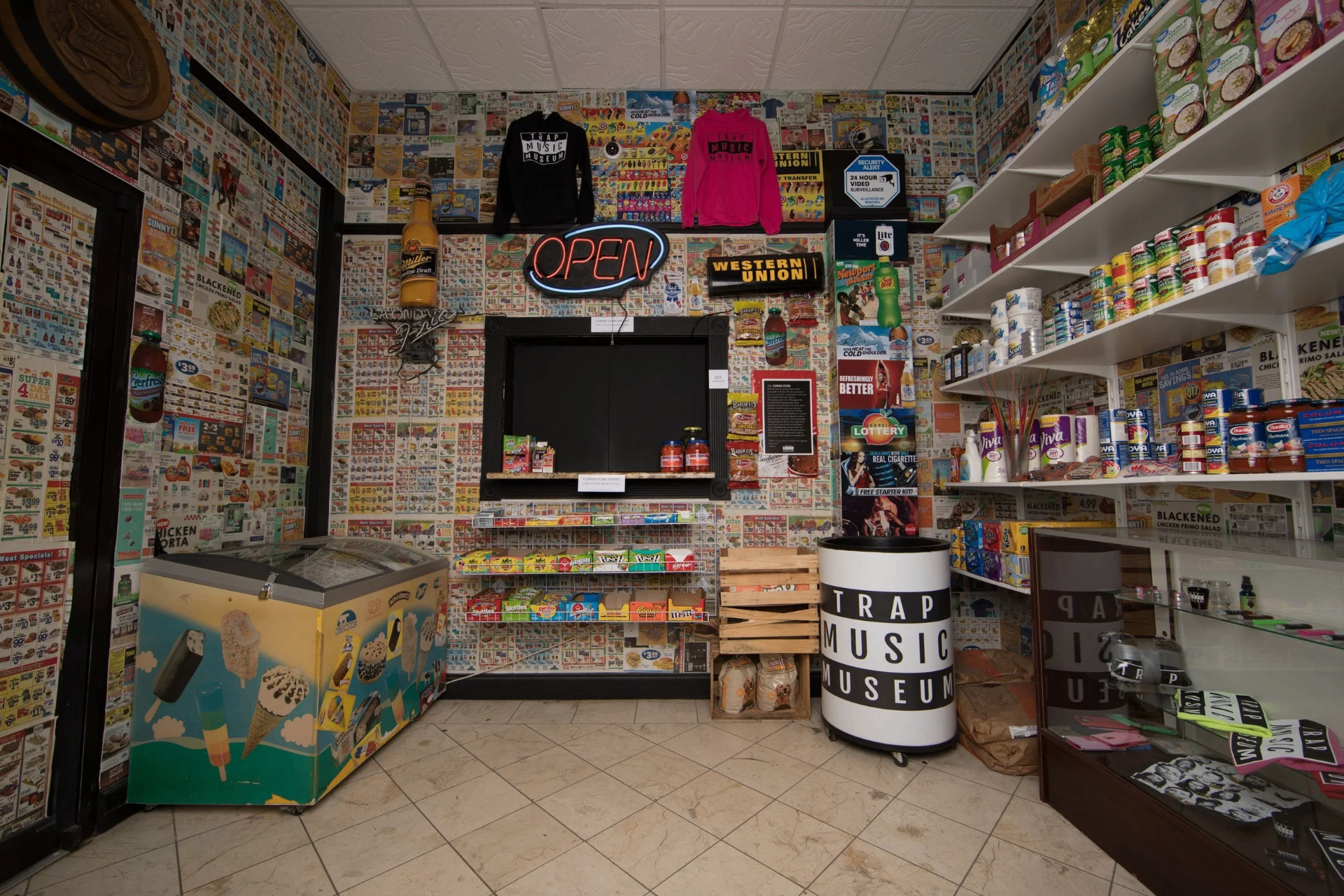
The Trap Music Museum is another kind of extension.

In September 2018, the Associated Press reported that T.I. was opening the Trap Music Museum in Atlanta as a pop-up experience built around the history and culture of trap music. T.I. told the AP he wanted the space to celebrate the culture rather than center only himself.

The museum has since become a permanent Atlanta attraction, and its current site dates the public experience to 2018.

That move is different from selling a shirt.

T.I. had spent years arguing for trap music as a distinct cultural contribution from Atlanta.

The museum turned part of that cultural identity into a place people could physically visit.

The audience could walk into the story.

That is a different kind of asset: not merely merchandise attached to the artist, but an institution attached to the culture the artist helped popularize.

Interior installation at the Trap Music Museum in Atlanta, styled like a neighborhood corner store.
Inside Atlanta’s Trap Music Museum, the cultural experience T.I. helped bring to life in 2018.Trap Music Museum · Official brand/site image · editorial use ↗
06

Intrada Westside moved the ownership idea from brand extensions into the ground itself.

The receipt
143
Intrada Westside apartments

Urbanize Atlanta and Atlanta Housing document 143 affordable units at Intrada Westside. T.I. acquired the former shopping-center site; specialist developer Vecino Group delivered the project.

Source

Real estate had been part of T.I.’s business thinking long before the current chapter.

But Intrada Westside gives the clearest documented version of the move.

Dynasty Realty’s project record says T.I. purchased the former Giant Food and Kmart property on Donald Lee Hollowell Parkway — a seven-acre site in Westside Atlanta — and partnered with affordable-housing developer Vecino Group to co-develop it.

That partner choice matters.

Buying property and developing a 143-unit housing community are not the same job.

T.I. could bring capital, local connection and the site.

Vecino brought specialized development capability.

Dynasty worked as acquisition and development project manager.

The completed community opened in 2023 with 143 affordable units. Atlanta Housing says 25 are permanent supportive-housing units.

There is also an ownership boundary worth keeping clear.

Later project reporting says T.I. sold the property to Vecino before construction began.

So the accurate story is not that T.I. currently owns all 143 apartments.

The useful story is the sequence:

buy the site → bring in a specialist development partner → move the property into a completed community.

That is another version of the Grand Hustle pattern.

Do not build every capability yourself.

Control enough of the opportunity to have a meaningful position, then bring in people whose operating expertise can actually get the project finished.

T.I. and Atlanta housing and city leaders at the ribbon cutting for Intrada Westside.
T.I. joined Atlanta Housing, city leaders and project partners at the Intrada Westside ribbon cutting. The completed development contains 143 affordable units.Atlanta Housing · Official public-agency press-release image · editorial use ↗
How the business spread

THE BUSINESS
MAP

Each move pushed the career into a different kind of asset. The progression matters more than the number of logos.

01 · MUSIC
Grand Hustle

Co-founded with Jason Geter; turned the post-Arista rebuild into an operating label and artist-development platform.

02 · FASHION
AKOO / Hustle Gang

T.I.'s official site identifies him as owner; historical reporting also documents shared business roles around the brands.

03 · CULTURE
Trap Music Museum

T.I. curated and opened the Atlanta trap-culture experience in 2018; it has since become a permanent visitor attraction.

04 · STREAMING
TIDAL

T.I.'s official site records a historical artist-owner position beginning in 2016; treat this as a historical ownership chapter, not a current cap-table claim.

05 · PUBLISHING
Reservoir

2026 publishing partnership spanning back catalog and future works; public terms do not establish a catalog sale or disclosed ownership percentage.

06 · TECH / DATA
pocstock

2026 investment in a rights-cleared culture/data company. T.I. is an investor only; financial terms are undisclosed.

07 · REAL ESTATE
Buy The Block / Intrada Westside

T.I. acquired the former shopping-center site and later sold it to specialist developer Vecino Group, which delivered the 143-unit affordable-housing community. Atlanta Housing supports 25 permanent supportive units.

07

The 2026 Reservoir deal put the catalog back at the center of the business story.

The receipt
ENTIRE CATALOG
Reservoir publishing scope

Reservoir says its July 2026 publishing deal spans T.I.'s back catalog and future works. Financial terms were not disclosed.

Source

On July 9, 2026, Reservoir announced a publishing deal with T.I.

Reservoir said the agreement covers work across his entire publishing catalog — back catalog and future works.

That is a significant rights relationship.

It is also important not to overstate what the announcement says.

Reservoir called it a publishing deal and a partnership.

The public announcement did not disclose the financial terms.

It did not give the public enough information to claim that T.I. sold his publishing, retained a specific percentage, received a specific advance or transferred every underlying right.

Those details should stay unknown unless better documentation appears.

What is clear is that after more than two decades of records, the songs themselves remain part of the business.

A catalog can outlive the campaign that created it.

Publishing administration, licensing, collections and catalog expansion can keep generating work long after the original release window ends.

T.I.’s career began with the problem of getting a label to push the next album.

By 2026, one of the important deals was about how decades of songs would be worked going forward.

That is a different position in the value chain.

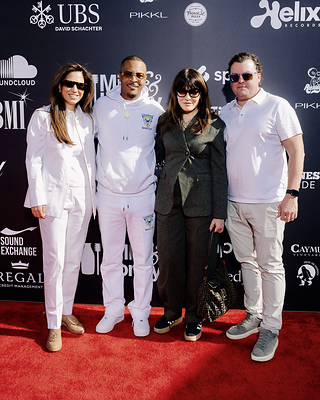
T.I. standing with Reservoir Media executives at a music-industry event in 2026.
T.I. with Reservoir leadership in 2026 as the company announced a publishing partnership spanning his back catalog and future works.Courtesy of Reservoir Media · Official press image · editorial use ↗
08

pocstock is an investment — not another company T.I. “owns.”

The receipt
INVESTOR ONLY
pocstock role

Reporting on the September 2026 announcement says T.I.'s involvement is limited to his role as an investor and that financial terms were not disclosed.

Source

Two months after the Reservoir announcement, T.I. made another move in a very different category.

On September 15, pocstock announced an investment from T.I.

The company licenses rights-cleared, culturally informed visual content and datasets for media, technology and artificial-intelligence use.

That makes the investment relevant to a larger argument around creators, culture and who participates economically when creative work becomes training data.

But the cleanest part of the announcement is also the most important for RRL to preserve:

T.I.’s role is investor.

pocstock explicitly said his involvement is limited to that role.

Financial terms were not disclosed.

That means the story is not “T.I. launched an AI company.”

He did not.

It is not “T.I. owns pocstock.”

The public record does not establish that.

He invested in a company whose business model sits around licensing, consent, cultural representation and creator participation.

That distinction makes the move more credible, not less.

A portfolio does not require pretending every investment is a founder story.

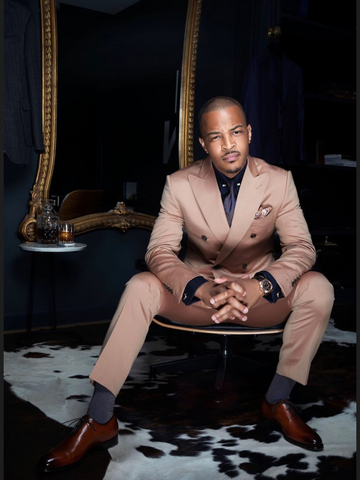
T.I. seated in a tan suit in the press photo for pocstock's 2026 investment announcement.
T.I. in the press image accompanying pocstock's September 2026 announcement of his investment in the company.pocstock / Business Wire · Official press-release image · editorial use ↗
What survives the story
“The businesses changed. The position kept moving.”

The ownership line is the story — but so are the limits.

Grand Hustle is a company T.I. built with Jason Geter.

AKOO and Hustle Gang are clothing businesses his official site identifies him as owning, with historical reporting documenting shared operating relationships.

The Trap Music Museum grew from the trap-culture experience T.I. curated and opened in Atlanta in 2018.

Reservoir is a publishing partner.

pocstock is an investment.

Those are not interchangeable words.

And that may be the most useful business lesson in the entire run.

Hip-hop business coverage often turns every association into ownership.

A celebrity appears in an announcement and suddenly the internet says they own the company.

A licensing relationship becomes a brand.

A paid endorsement becomes equity.

An investment becomes a startup the artist supposedly founded.

That inflation makes the story sound bigger while making the business lesson worse.

T.I.’s actual run is strong enough without it.

He experienced a label situation that did not work.

He helped build his own company.

He rebuilt demand.

He returned to a major looking for a partnership instead of only another artist contract.

He used the platform to develop other talent.

He expanded into physical brands and a cultural institution.

Then, more than twenty years later, the catalog itself became the center of a new publishing relationship while new capital moved into a rights-focused technology company.

The businesses changed.

The position kept moving.

What scales down

Most artists will not build Grand Hustle, open a museum or invest in an AI-data company.

That is not the takeaway.

The part that scales down is the order of operations.

Build proof before asking for leverage.

If a song is moving, document the audience before negotiating distribution.

If a visual identity is connecting, protect the name before putting it on products.

If collaborators are helping build the record, define the splits before success makes the conversation harder.

If a partner can add real infrastructure, know what they are adding and what you are giving up.

And when somebody says you “own” something, make sure the paperwork says the same thing.

T.I.’s first major business turn was not becoming independent forever.

It was building enough outside the old situation to come back to the table differently.

That is the part worth studying.

Bring it down to earth

WHAT
SCALES
DOWN

Build proof before asking for leverage. Separate ownership from partnerships, licensing, endorsements and investments. Use specialists when they add real infrastructure, protect the assets you are actually building, and make sure public ownership claims match the paperwork.

The Briefing

The Weekly Briefing

One email with the stories worth knowing, the artist moves worth studying and anything around RRL you should not miss.